Every child deserves someone who believes in them
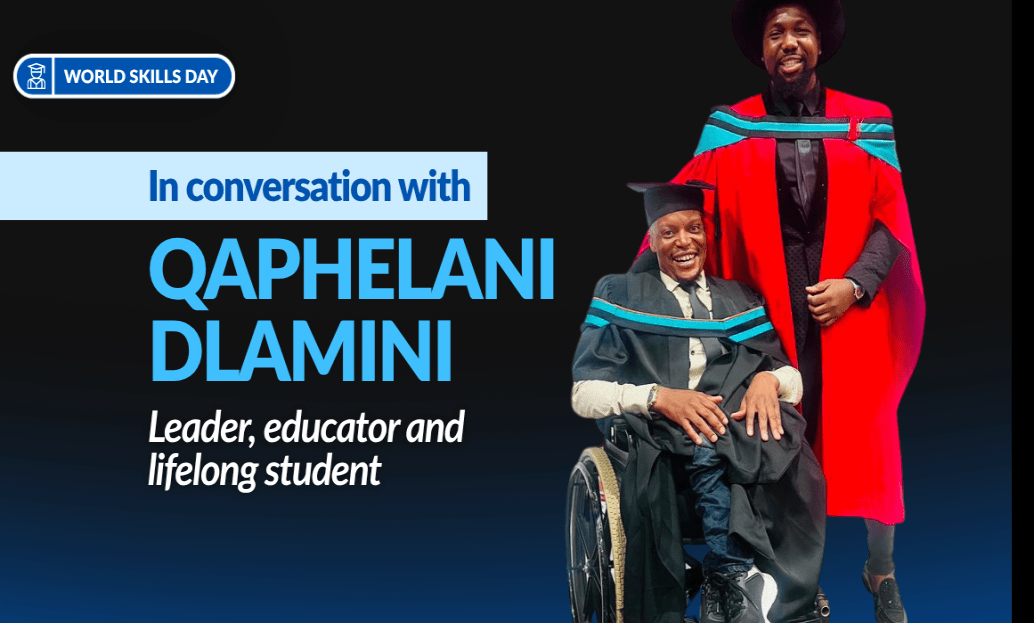
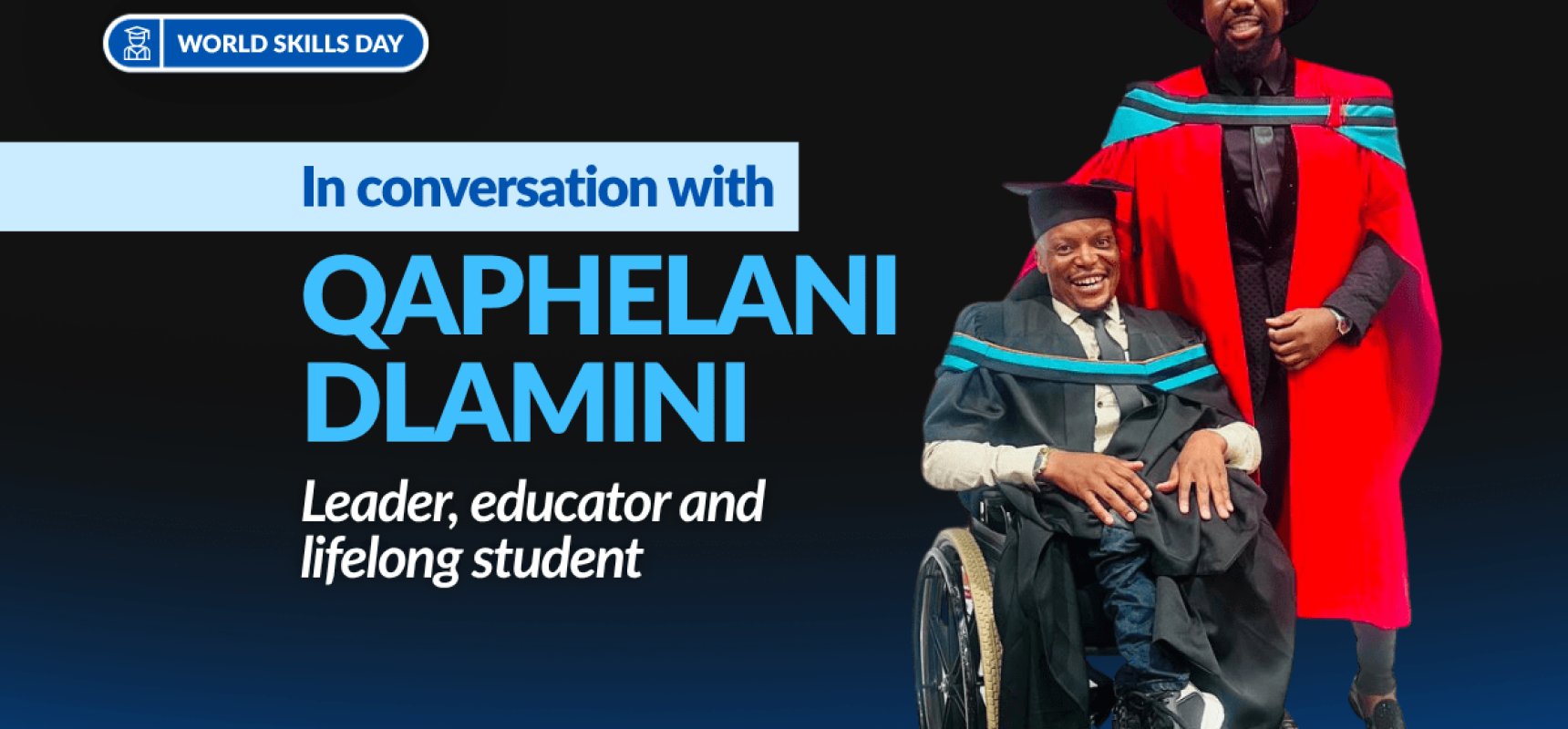
From a rural village in KwaZulu-Natal to the global stage, Qaphelani Dlamini’s life is proof that resilience, education and one person’s belief can change countless lives. Long before he became an award-winning educator, researcher, international speaker, sportsman and advocate for inclusive education, Qaphelani was a little boy growing up in the remote village of Enyezane near Loskop in northern KwaZulu-Natal.
Like many children growing up in rural South Africa, his childhood was marked by poverty, however, diagnosed with Spina Bifida at the age of five, Qaphelani’s childhood was also shaped by limited healthcare resources, inaccessible infrastructure, and a lack of support for children living with disabilities. “I did not have a wheelchair or any assistive devices. Schools were not designed for children with disabilities, and public transport was largely inaccessible,” he recalls. “The simplest activities required careful planning, patience and perseverance. I had to crawl wherever I wanted to go, often on bloodstained hands and knees.”
Children with disabilities were frequently excluded and underestimated. “In our communities, we carried the burden of stigma alongside the challenges of daily life. No one expected us to amount to anything.” Yet, in the Dlamini household, one person believed otherwise.
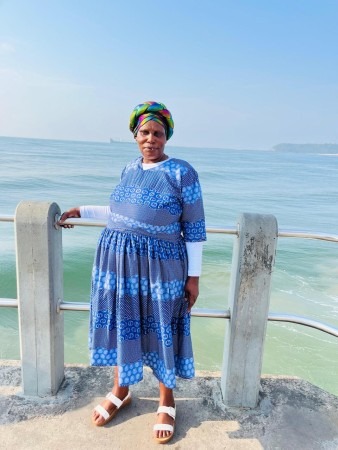 “My mother, KaMthathephi Dlamini, was the powerhouse behind my development. Where others saw disability, she saw possibility. Not once did she allow society’s perceptions to define my future.” Her belief became the foundation on which he built his life. “She cared for me tirelessly and encouraged me to believe in my potential. Her unwavering faith shaped every chapter of my life and reminded me that my worth would never be measured by what I could not do.” Looking back, Qaphelani remembers a childhood filled not only with hardship, but also with resilience, faith and a sense of belonging. His mother taught him perseverance, empathy, integrity, humility and the importance of inclusivity. Values he now considers the foundation of his life’s work.
Qaphelani attended primary school at KwaZamokuhle Special School before completing matric at Amahlubi High School. Every year at school strengthened his confidence, while every teacher who believed in him reinforced the lessons his mother had taught him.
“Education became far more than earning qualifications. It became my freedom, dignity and hope. It showed me that my disability did not diminish my ability to learn, lead and contribute.”
His journey was made possible by people and organisations that invested in his education when his family could not. Funding enabled him to remain at school from Grade 1 to matric, although he was forced to stay home for one term in Grade 10 when financial support temporarily fell away. “It was one of the most painful moments of my education,” says Qaphelani.
After matric, a National Student Financial Aid Scheme (NSFAS) bursary enabled him to study teaching at the University of Zululand, where he completed his Bachelor of Education in 2012.
“For the first time, the future my mother had imagined for me felt real.”
He later completed an Honours degree in Leadership and a Master’s in Education through the University of South Africa and is currently pursuing a PhD focusing on leadership development and inclusive education.
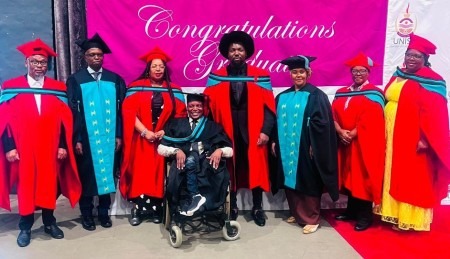
“My postgraduate studies were not without challenges,” he says. “There were times when I questioned whether I would ever finish, until the guidance of Dr S.M.K. Cele restored my confidence as a researcher.
Throughout that time, support from the N3TC Bursary Programme eased my financial burdens and renewed my determination. ”More than financial assistance, he says, it was the knowledge that others believed in him that fuelled his determination.
“Every scholarship, mentorship and bursary became confirmation that I was no longer crawling, but walking — even flying — towards the place of my dreams.”
Choosing the classroom
In 2009, Qaphelani faced a life-changing decision. Having excelled in wheelchair basketball after discovering the sport in 2003, he had progressed rapidly through the ranks, captaining the KwaZulu-Natal under-23 team, earning national colours and receiving recognition as one of the country’s top young players.
Wheelchair basketball transformed how he viewed himself. “It gave me confidence, independence and a sense of belonging. It helped break many of the negative beliefs I held about my disability.” His achievements eventually led to international recognition, including a Global Sport Award in the United States in 2019 and selection by the US Department of State as Exemplary Alumni the following year.
Yet by then, another calling had taken root. “I was experiencing a strong pull to dedicate myself to transforming lives through education.” He ultimately chose the classroom over professional sport: “Giving up the opportunity to play professionally never felt like giving up on a dream. I chose a dream that would allow me to multiply opportunities for others.”
Opening doors for others
When Qaphelani joined KwaZamokuhle Special School in 2013 as a Mathematics and Computer Science educator, he brought far more than academic knowledge. He understood first-hand the barriers his learners faced.
Situated near Estcourt, KwaZamokuhle serves learners with a range of physical disabilities and additional support needs, many from rural communities where specialist educational services remain limited. “I see myself in many of the children I teach,” he says. “I understand the barriers they face, but I also know those barriers do not define what they can achieve.”
Over time, he progressed from teacher to Departmental Head and Acting Principal, mentoring colleagues and strengthening curriculum delivery. For Qaphelani, leadership begins with service. “It is about helping people recognise the strengths they may not yet see in themselves.”
Teaching confidence before content
Ask Qaphelani what he teaches, and he speaks first about confidence. “Many learners arrive believing mathematics is only for clever people. My first task is changing that belief.”
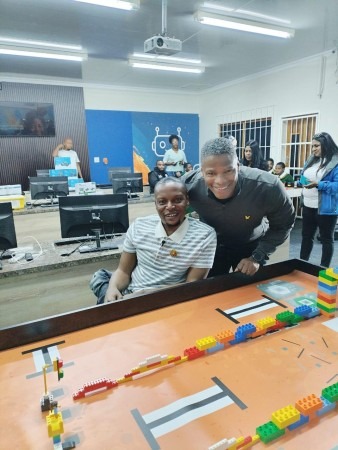 His classrooms encourage questions, celebrate mistakes as part of learning, and recognise every success, however small. “Critical thinking matters more than memorising formulas. Understanding matters more than speed. Progress matters more than perfection. I remind my learners that every mathematician, scientist and engineer has made mistakes. Learning begins when we stop being afraid of getting something wrong.”
Preparing learners for tomorrow
Qaphelani believes today’s learners need skills and opportunities that did not exist when he was growing up. One initiative particularly close to his heart is the Coding and Robotics Hub established at KwaZamokuhle through a partnership between UNICEF and various corporate sponsors.
“For many learners, this is their first meaningful exposure to coding, robotics and digital technologies. It demonstrates that learners with disabilities are not only capable of participating in STEM education but of excelling when given equitable opportunities. I would like to see learners with disabilities become creators of technology rather than simply users of it. Artificial intelligence, automation and digital technologies are reshaping the world of work. Our responsibility is not simply to prepare learners for examinations. We must prepare them for life by equipping them with confidence, curiosity and the courage to keep learning.”
His contribution has earned him national and international recognition. In 2022, he received the National Teaching Award for Excellence in Special Needs Teaching. He has presented at the Department of Basic Education’s National Lekgotla, addressed education leaders from the African Union and European Union, and represented South Africa at the Global Disability Summit in Berlin, advocating for inclusive education. Yet, he remains focused on the children in his classroom.
“The greatest reward is seeing a learner who once believed they couldn’t succeed discover that they can. That is the real measure of success.”
Knowledge with purpose
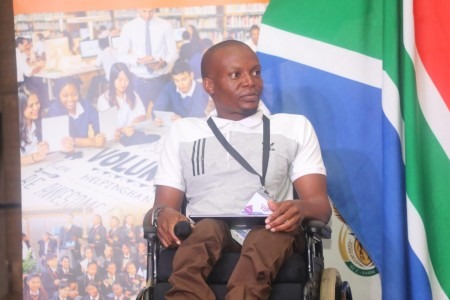 Alongside teaching, Qaphelani continues to research leadership in special schools, exploring practical ways to strengthen school management, improve policy implementation and build more inclusive learning environments. “Research should never gather dust on library shelves. It should provide practical solutions in classrooms, support teachers, inform policy, and change lives.” His work continues to influence education far beyond South Africa as he advocates for disability to be recognised not as a limitation, but as one aspect of human diversity.
Courage to do better
Asked where South Africa still needs to grow, his answer is immediate: 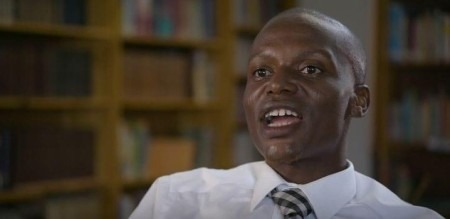 “Our country has developed progressive policies promoting inclusive education. The challenge now is turning policy into everyday realities.”
Qaphelani believes schools need better infrastructure, greater access to assistive technologies, and ongoing educator-development while learners in rural communities deserve the same opportunities as those in better-resourced urban schools.
“If I could change one thing tomorrow, I would ensure that every learner, regardless of where they live or whether they have a disability, has equal access to quality education, qualified teachers, technology, and learning resources.”
Ultimately, his definition of leadership takes him back to where his own journey began.
“True leadership is about collaboration and serving others. It is about creating opportunities and helping people believe in possibilities they may not yet see for themselves. Leadership is not found in titles, but in people who have the courage to do better, just like my mother dared to do for me all those years ago. Helping someone believe in their own potential can never be measured by certificates or trophies.”