
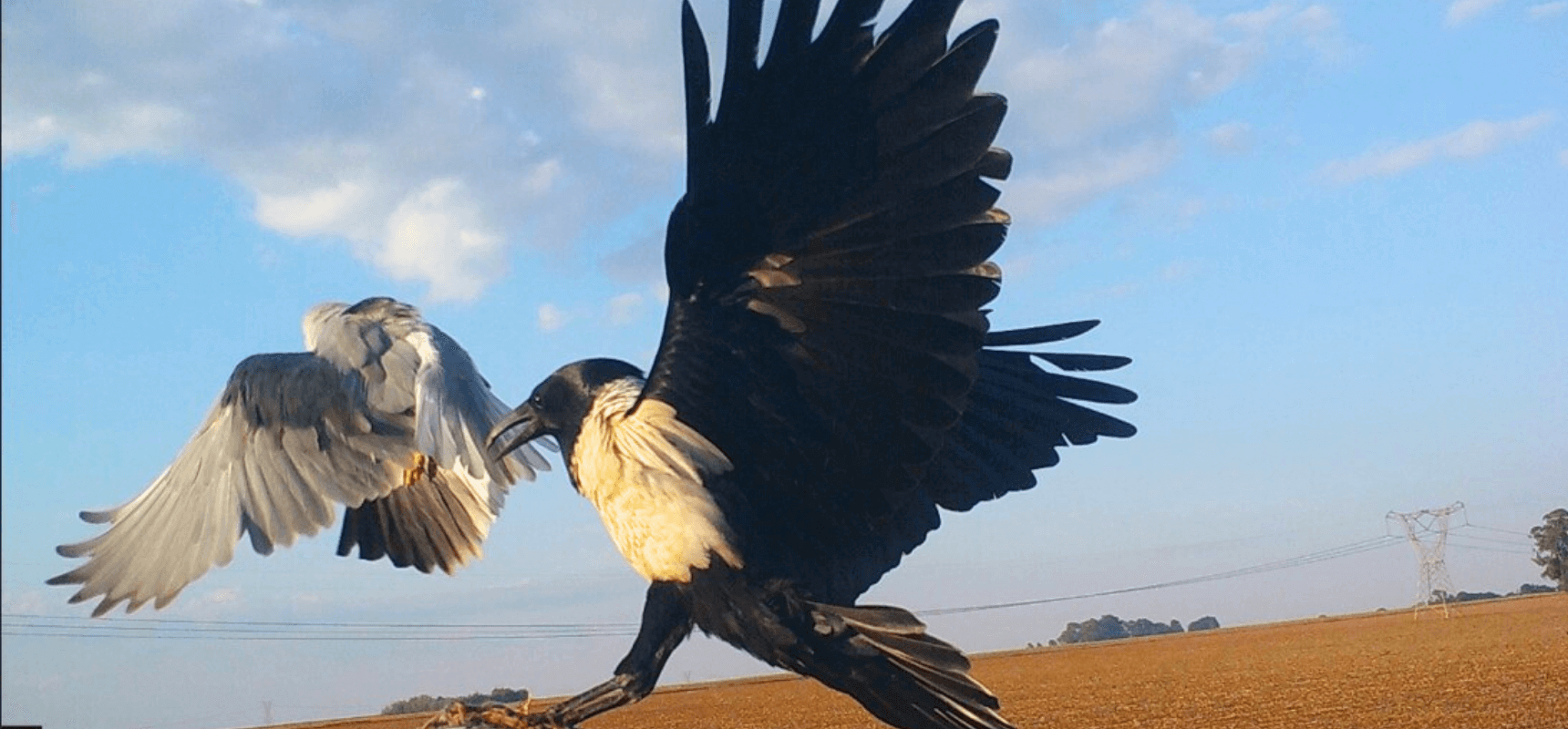
Stretching between KwaZulu-Natal and Gauteng, the N3 Toll Route passes through a wide range of habitats – grasslands, freshwater ecosystems, wetlands, and agricultural land.
These open landscapes and farm fields teeming crops, naturally attract wildlife—including mammals, owls, and raptors—bringing them dangerously close to this busy highway.
Conservation efforts show promise
In 2014, N3TC and the Endangered Wildlife Trust (EWT) began gathering data on wildlife vulnerability, their movement, and mortality along the N3 Toll Route.
“We aimed to better protect them from harm with a combination of data-driven science, engineering and design expertise, inventive mitigation strategies, and collaborative partnerships. Now, over a decade later, we are beginning to reap the results from our conservation efforts,” explains Thania Dhoogra, chief operating officer of N3 Toll Concession.
Special landing spots for feathered friends
Raptors are apex predators and scavengers. They are crucial to maintaining balanced and resilient ecosystems by helping to regulate populations of rodents, reptiles, and other small animals, while scavenger species, such as vultures, contribute to cleaning up carcasses and preventing the spread of diseases.
However, these birds face significant threats when their natural hunting and feeding grounds overlap with human activity. Studies have shown that road mortality, together with habitat loss, poisoning, and electrocution from power lines, are some of the leading causes of population decline of several raptor species.
Due to the high distribution of wildlife—which includes the prevalence of raptors—and heavy traffic conditions, parts of the N3 Toll Route have, unfortunately, become hotspots of wildlife mortality. Birds of prey have been spotted hunting from road signs, safety barriers, boundary fences, and raised road markers, while scavengers have been seen feasting off food dropped from passing vehicles.
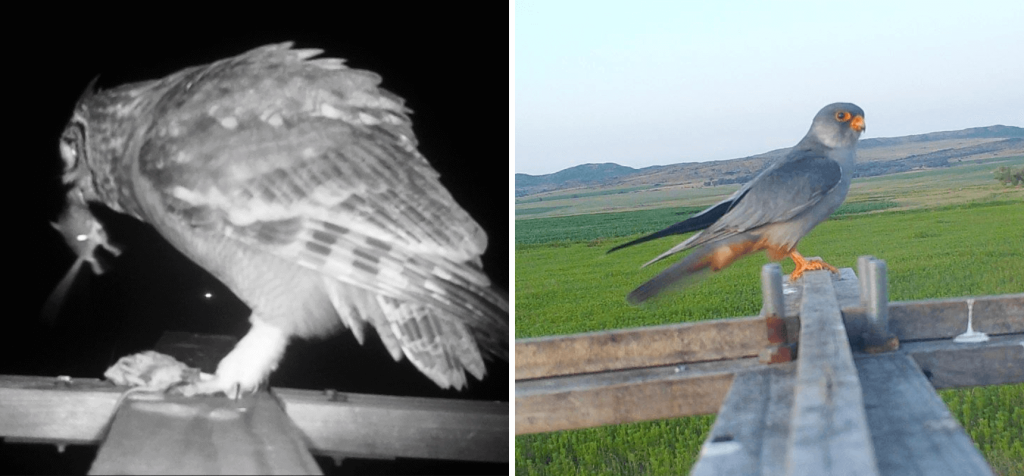
In response, EWT and N3TC have been installing raptor perches at strategic locations away from the road where owls and other birds of prey could perch more safely, and camera traps to monitor the effectiveness thereof.
In recent years, a significant increase has been recorded in bird of prey activity on the perches, with the highly Endangered African Grass Owl (of which less than 5,000 individuals are likely left in the wild) being one of the species making regular use of the perches.
Barn Owls, Marsh Owls, Black-winged Shoulder Kites, and some falcon species also use the perches as their feeding zones, while wading birds, such as the Black-Headed Heron and passerine species (Stonechats and Pied Starlings) often rest here.
Dr Thabo Hlatshwayo of the EWT says the camera traps are proving invaluable for increasing their understanding of bird-interactions with roads and refining their mitigation strategies.
“It has become clear that birds of prey, at least in some part, use these special roadside structures for resting and feeding purposes, and that by providing these alternatives, they spend less time on or near roads, which reduces roadkill casualties considerably. We expect to learn even more from these camera traps, and to record rare glimpses into the daily lives of raptors.”
From drainage culverts to safe pathways for wildlife crossings
“In addition to raptor perches, our team is also leveraging existing road infrastructure, such as the drainage culverts and tunnels beneath the N3 Toll Route, and roadside fencing, to create safe wildlife corridors,” explains Dr Hlatshwayo. By creating funnels to safe crossing points, we are promoting habitat connectivity while reducing risky highway encounters.”
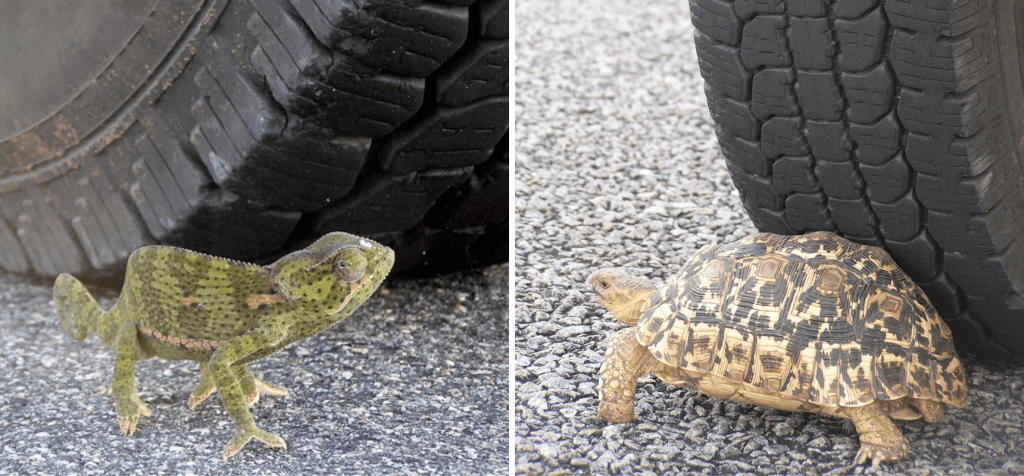
Since rolling out their strategy to create safe wildlife corridors, EWT and N3TC have installed camera traps close to five drainage culverts. Data from these culverts shows that at least 23 different mammal species and 26 bird species are utilising these safe corridors between different sections of land.
Mammals (59.1%) are the most frequent users of these crossings, followed by birds (40.7%). Reptiles and amphibians each account for just 0.1% of the detections.
“It is our hope that this project, and our experiences, will encourage future generations to balance human mobility and wildlife safety when new infrastructure is developed. Simple, wildlife-friendly strategies and a few simple engineering design measures could prove vital to safeguarding South Africa’s natural heritage. Their survival depends not only on healthy ecosystems, but also on human responsibility to manage the spaces where wildlife and people intersect,” ends Dr Hlatshwayo.
This article was first published in By The Way, produced by SANRAL, Oct/Nov 2025: https://publications.nra.co.za/books/lxer/