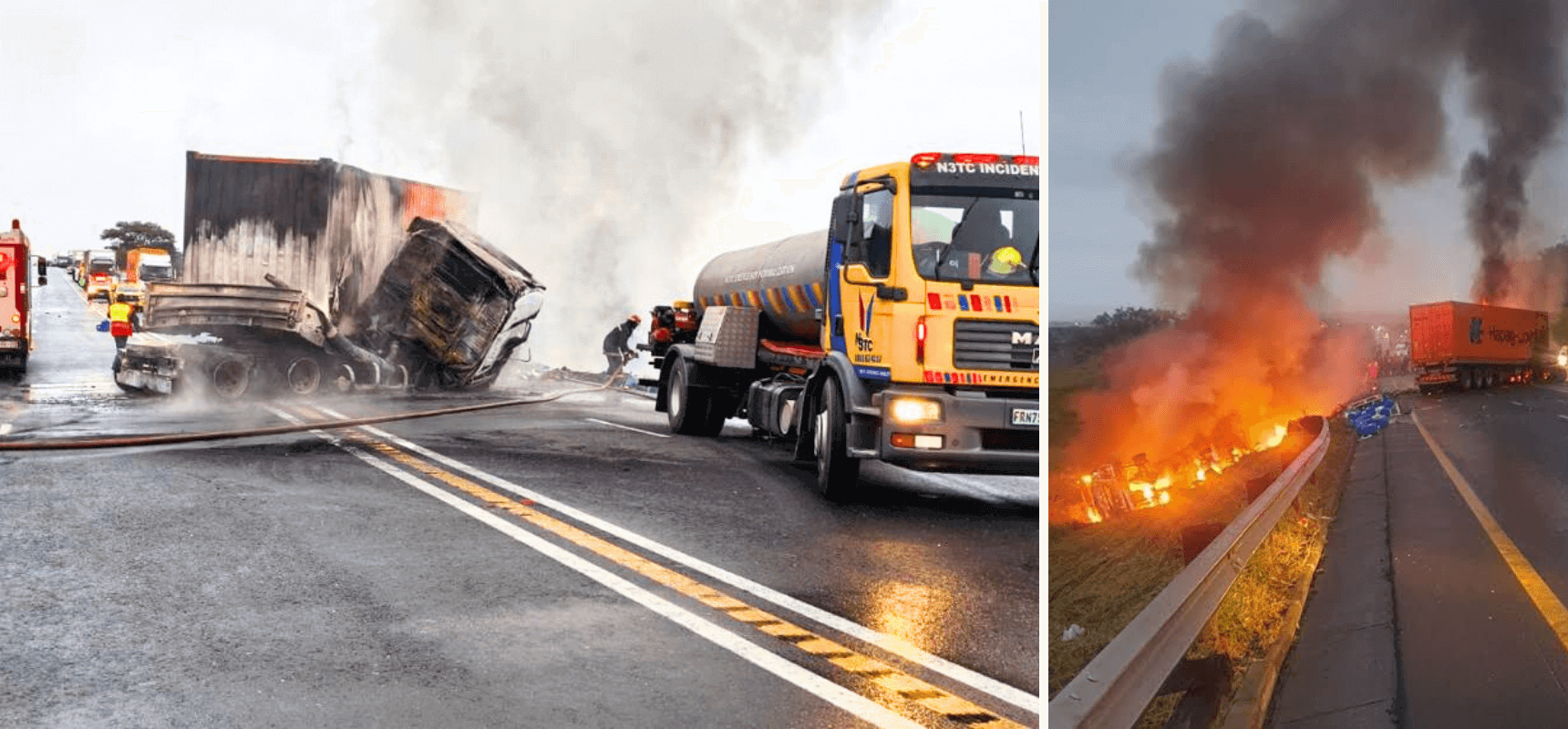
South Africa’s national roads are increasingly carrying the burden of transporting hazardous cargo, a trend primarily driven by the decline of the country’s rail system.
This shift is particularly evident along key transport corridors such as the N3 Toll Route, linking Gauteng’s industrial centre with KwaZulu-Natal, and the Durban Port, considered the premier gateway for trade. The resultant significant increase in heavy vehicle traffic is accompanied by a marked escalation in associated risks.
Increased traffic volumes, combined with a mix of vehicle types, increase the likelihood of traffic congestion, which further amplifies the potential for serious incidents involving trucks, including those carrying dangerous goods.
Furthermore, trade routes such as the N3 traverse diverse landscapes passing through towns, rural communities, agricultural areas, and ecologically sensitive zones. The more hazardous substances are transported by road, the greater the exposure to people, infrastructure, property, and the environment.
These challenges highlight the critical importance of managing and mitigating the dangers associated with transporting hazardous cargo on South Africa’s roads.
Safety is Non-Negotiable
Experts warn that strict adherence to safety regulations is essential. “Given the unpredictable nature of hazardous cargo incidents, where a single misstep can have far-reaching consequences, everyone has a role to play in keeping our roads safe,” says Praveen Sunderlall, manager of the N3TC Road Incident Management System (RIMS). “It is not only about the transport industry complying with regulations, but also about the public understanding the risks, and acting responsibly when encountering these types of incidents.”
Wait Before You Approach
A fundamental principle in incident management is straightforward yet critical: never approach a crash scene, especially one involving a goods truck. You should always learn what cargo a truck is carrying before going near a crash site.
Emergency services typically assess scenes from a safe distance to read displayed placards before deploying teams in appropriate protective gear. Approaching too soon can expose responders or bystanders to invisible toxic gases, vapours, or secondary hazards such as fire and explosion.
Failure to contain a scene correctly can also lead to long-term environmental harm, including groundwater and soil contamination.
A Strong Regulatory Backbone
The transport of dangerous goods in South Africa is tightly regulated under the National Road Traffic Act, which prescribes standards for:
- classification and identification of hazardous substances
- specialised vehicle design and registration
- driver training and licensing
- packaging and emergency information systems
- and mandatory safety equipment, placarding, and documentation
“In short, dangerous goods transportation is tightly regulated, and for good reason,” says Mr Sunderlall. “It is encouraging to see many operators not only meeting but exceeding these legal requirements, but we can’t ever afford to drop the ball.”
Compliance Inspections
N3TC and its RIMS partners regularly conduct random compliance inspections along the N3 Toll Route. Data from these checks shows that most local operators implement internationally benchmarked safety systems, often going beyond standard compliance requirements.
“By doing so, they protect their operations from loss and reputational damage while promoting transparency, building trust, and investing in the greater good and safety of everyone,” adds Mr Sunderlall.
Proven progress, but ongoing challenges
Through combined efforts, industry stakeholders have succeeded in:
- reducing crash and spill incidents on the N3 Toll Route
- improving environmental protection
- advancing driver and vehicle safety
- strengthening first responder training
- improving public education and risk awareness
However, despite the progress made, some challenges remain. “Smaller, unregistered, or informal operators, particularly those crossing into South Africa from outside of our borders, often evade compliance. In addition, new energy vehicles require continuous safety protocols and training updates to keep pace with developments, while ever-increasing traffic volumes and road congestion continue to compound the risks,” stresses Mr Sunderlall.
Safer roads are good for business
“Ultimately, safe roads make good business,” concludes Mr Sunderlall. “Collaboration, compliance, and shared accountability across the transport ecosystem benefit the industry, and every person who travels our roads.”
By fostering public awareness and encouraging motorists to heed warning signs, maintain safe distances, and cooperate with authorities during emergencies, the risk of accidental exposure or escalation of incidents can be greatly reduced.
South Africa’s road transport industry has demonstrated that robust legislation, effective self-regulation, and accountability can deliver world-class safety outcomes. “A culture of shared responsibility and informed caution safeguards lives, and prevents environmental disasters, while keeping vital trade corridors productive and secure for everyone who relies on them,” ends Mr Sunderlall.