

Newsletter
Sign up below
Traffic Alerts
Sign up here
Unsubscribe here
Disclaimer
N3TC Copyright 2008

Contact Details | FAQs l Site Map

Construct

 
Home > About Us > Key Functions > Construct

The construction work on the highway is broadly divided into three categories namely Rehabilitation Works, Upgrade Works, and Ancillary Road Works.

Rehabilitation Works are repairs to the existing road pavement to ensure that it meets the functional and structural engineering requirements. These works include:

    - Road pavement recycling.
    - Asphalt overlays / inlays.
    - Seals or micro-surfacings.
    - Shoulder reconstruction / surfacing.
    - Complete reconstruction of a section of road pavement.

Upgrade Works are geared at increasing the Highway capacity and include:

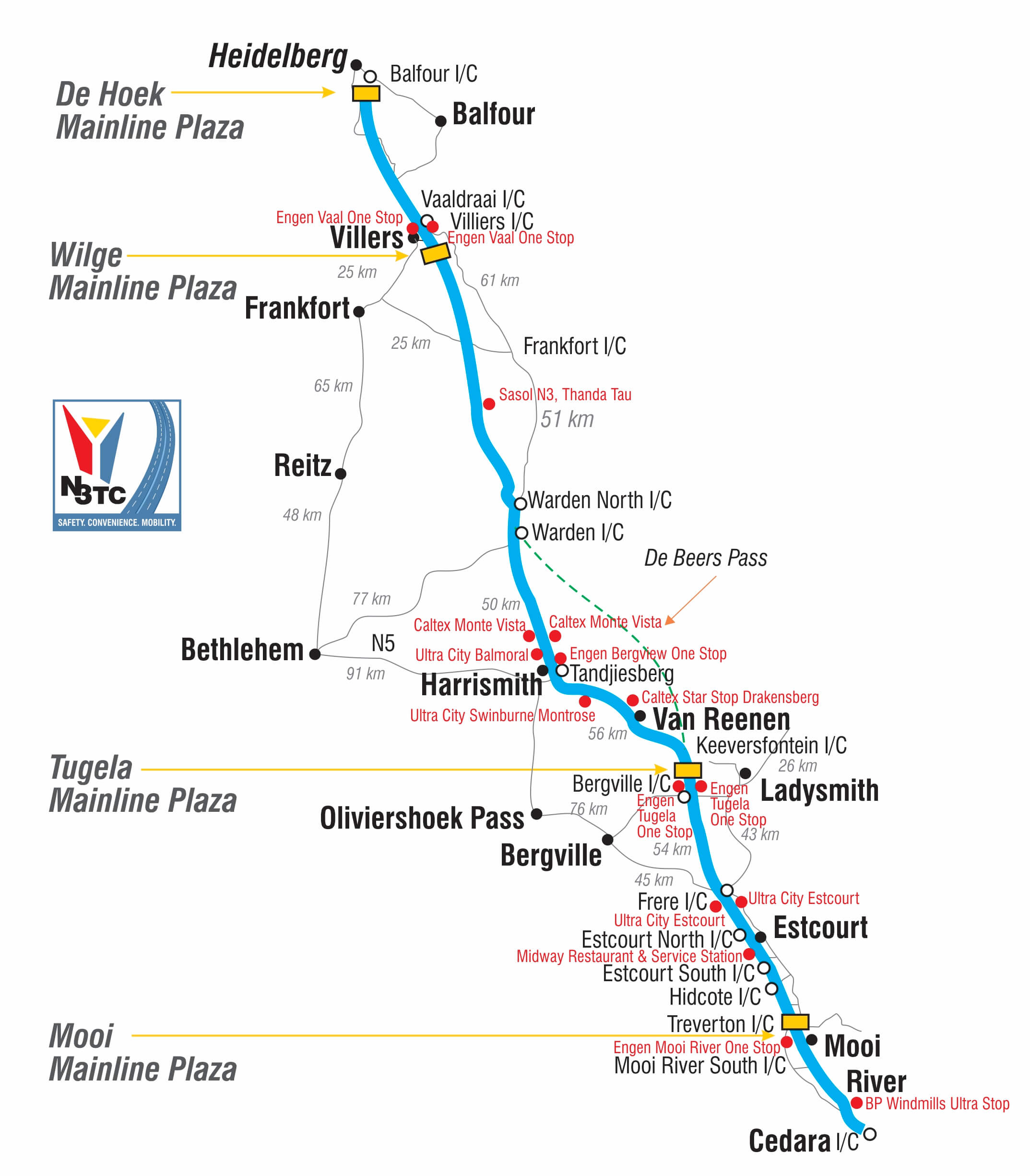
    - Construction of new four-lane divided highways. This would include the section near Heidelberg past De Hoek Toll Plaza. At a later stage in the Concession Contract, N3TC must construct a new four-lane highway from Tugela Toll Plaza to Warden.
    - Adding of additional lanes such as the doubling up from two to four lanes that took place from De Hoek Plaza to the Vaal River.
    - Constructing of climbing lanes to alleviate traffic congestion where gradients are steep.

Ancillary Road Works relate to other aspects of the highway and include:

    - Repairs to bridges and other structures.
    - Stabilisation of slopes.
    - Drainage works: construction of new subsoils, concrete and earth lined drains, pavement drainage (megaflow drains) and associated inlet / outlet structures.

The timing of construction work is planned to ensure that the highway meets the stringent engineering requirements at all times. Once a contractor has been selected through the tender process, consultants are appointed to supervise the works on site.

Construction work, particularly rehabilitation works, can result in delays to motorists at construction zones. In order to minimise this, N3TC places certain restrictions on construction activity during peak traffic periods. The N3 is also a designated abnormal load route, and arrangements have to be made for abnormal loads, some as wide as eight metres, to pass through the construction zones.

Safety of construction workers and the travelling public is of paramount importance at construction zones. Adherence to construction signage and posted speed restrictions at construction zones is critical to ensure safety.

Although construction can result in frustrations and delays to motorists, it is the only way that N3TC can ensure that we continue to provide a world class road that provides safe and convenient travel.